
A Deep Dive into the AIM Framework
Moving Beyond Installation Checklists

According to the firm’s website, Accelerated Implementation Methodology (AIM) “is a research-based change management methodology designed to help organizations achieve sustained adoption of new behaviors, processes, and technology.”
Like most change management frameworks, AIM is grounded in a core set of fundamental concepts. However, it distinguishes itself by treating these concepts as living principles for a 'change-ready' environment rather than static tasks on a project plan. By shifting the focus from checking boxes to building capability, AIM doesn't just drive a successful rollout but fosters a more agile, high-trust organization.
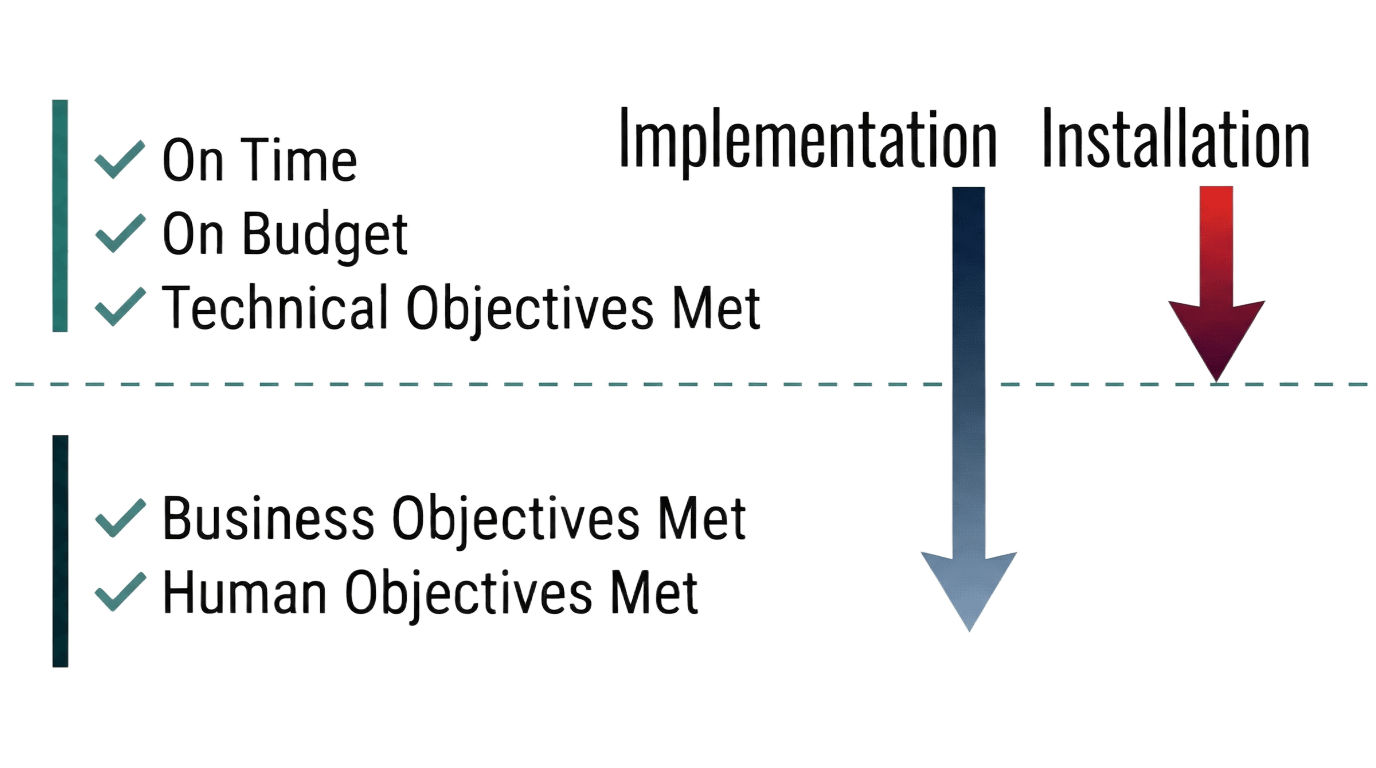
Implementation vs Installation
To deepen this distinction, AIM founder Don Harrison differentiates between installation—the technical act of 'plugging in' a solution—and implementation, the behavioral change required to extract its full value. By prioritizing the human side of the equation, organizations don't just 'go live’. Successful implementation is defined by monitoring the behavior change required to realize strategic goals faster and more effectively, the first time.
Clarity on the "Sponsorship" Role
In the AIM framework, Sponsorship is the single most important factor in ensuring implementation success. Instead of getting lost in vague language like "buy-in," AIM defines the rigorous behaviors needed for building a cascading sponsorship network that reaches every corner of the organization.
The methodology recognizes that project failure is rarely a technical issue; it is almost always a result of failed contracting. In AIM, "contracting" is the explicit agreement between Change Agents and Sponsors on the specific actions required to drive the change. By treating the Sponsor-Agent relationship as a professional partnership rather than a reporting line, AIM ensures that leadership commitment is active, visible, and (most importantly) measurable.
The Methodology, At a Glance
Rather than a linear checklist, these ten principles serve as a diagnostic compass, pinpointing exactly where an implementation is at risk and where resources will have the greatest impact.
Define the Change: Create a single, shared, clear picture of the future state.
Build Agent Capability: Equip change agents with the skills and influence to drive local adoption.
Assess the Climate: Identify environmental barriers that sabotage success.
Generate Sponsorship: Secure active, visible commitment from leaders to drive and sustain change.
Determine Change Approach: Select the implementation strategy that best fits the project’s context, scope and urgency.
Develop Target Readiness: Move impacted people from natural resistance toward required new behaviors.
Build Communication Plan: Establish a two-way feedback loop throughout the implementation process.
Develop Reinforcement Strategy: Align rewards and consequences to ensure new behaviors stick.
Create Cultural Fit: Analyze how the change disrupts or aligns with existing organizational values.
Prioritize Action: Identify and execute the critical next steps to maintain implementation momentum.
What Makes AIM different?
AIM has been a helpful framework for me because it provides the right amount of structure to direct limited resources to the areas of greatest need. It reframes resistance into a tool to be leveraged instead of a problem to solve. It provides essential focus on equipping leaders to deploy the behaviors that drive change. Consistent and aligned sponsorship then leads to increased trust in the culture, which, in turn reinforces a culture of change agility. Consistent and aligned sponsorship builds cultural trust, transforming change from a disruptive event into a permanent competitive advantage: true organizational agility.
