
Stop Clinging to the Front of the Truck
How to take back the driver’s seat in accountability conversations
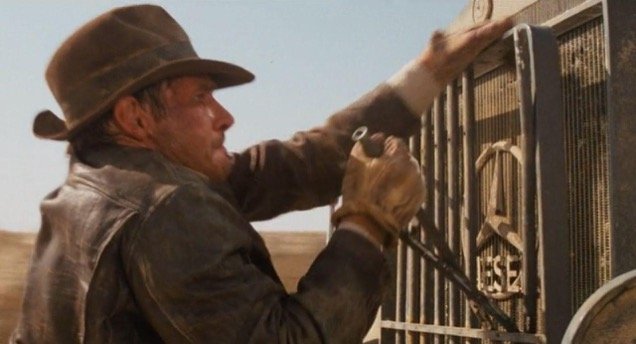
Indiana Jones and the Raiders of the Lost Ark. Directed by Steven Spielberg, Paramount Pictures, 1981.
I’ve noticed that even the most seasoned leaders rarely like to share their weaknesses, they often share clues if you are on the lookout. I recently spoke with a top executive who confessed that after 25 years at the helm, she still dreads having accountability conversations. I met another senior leader who could count on one hand how many times he had received actual feedback on his performance. Then there was the leader who tearfully showed me flowers in her office - a rare thank-you from someone acknowledging her hard work.
These are high-level professionals who navigate complex, tense, and crisis-laden scenarios every day. If they struggle with the cycle of giving and receiving feedback, it’s a safe bet that we all do.
Why Accountability Feels Like a Movie Stunt
Successfully navigating accountability often feels like a quest for a buried relic. Have you ever had those days where you're trying to resolve a conflict and you feel like Indiana Jones clinging to the front of a moving truck - just trying not to get run over?
-
Leadersmithing by Eve Poole
Crucial Accountability by Patterson, Grenny, et al.
In her book Leadersmithing, Eve Poole explores this "Holy Grail" of difficult conversations. While she offers great tips on how to say "no," the most critical skill for any leader is mastering the "difficult conversations about performance".
Giving and receiving feedback is both tough and desperately needed. If provided skillfully, it can provide a much needed pivot point that will have long-reaching impact. We often fear that a difficult conversation will damage a relationship, but when handled with care, it does the opposite -it provides the 'key in the lock' for someone else. We all have professional blind spots - shortcomings that stand between us and the next level of success. Expertly navigating these conversations allows us to help others see the 'unseen.' That wakeup call isn't just a performance correction; it’s a career plot twist that can launch an individual on a journey of self-discovery they didn't know they needed.
Getting Into the Driver’s Seat
To move from "clinging to the truck" to actually driving it, I’ve found that supplementing broad leadership concepts with specific tools is key. One resource I constantly recommend to new leaders is Crucial Accountability. It provides the tactical framework to handle violated expectations and broken commitments without the drama.
Two of my personal "go-to" tools from this approach are:
Mastering Your Story: To stay objective before the conversation even starts.
Ending with a Question: To ensure the other person is a partner in the solution.
